
How to Store Furniture Long Term Without Damage
A sofa stored with one damp cushion, a wood table wrapped in plastic, or a mattress left directly on a concrete floor can come out of storage in worse shape than it went in. Knowing how to store furniture long term comes down to controlling moisture, keeping pieces clean and supported, and choosing enough space to avoid crushing everything together.
For Niceville-area households, heat and humidity add another concern. A little planning before move-in can protect the furniture you want to keep for a future move, deployment, downsizing, renovation, or family transition.
Start With the Right Storage Unit
The best unit is not always the smallest unit your furniture can physically fit into. Long-term storage needs breathing room. You should be able to walk in, check for problems, and remove one item without dragging across the rest of the unit.
Climate-controlled storage is usually the better choice for wood furniture, upholstered pieces, mattresses, antiques, leather, musical instruments, and family heirlooms. Stable conditions help limit the expansion, contraction, warping, mildew, and musty odors that Florida humidity can cause. It is also a smart choice when you expect furniture to stay stored through more than one season.
Non-climate-controlled storage can work for durable items such as metal shelving, basic plastic furniture, or short-term overflow. The trade-off is that you need to be more careful about moisture and should not assume delicate materials will hold up the same way. If you are unsure which option makes sense, describe what you are storing and how long you expect to store it before choosing a unit.
Size matters, too. An 8x10 or 10x10 unit may fit furniture from a small apartment, while a 10x15 or 14x15 may be more practical for several rooms, larger sectionals, and boxed household belongings. Packing too tightly may save money on monthly rent, but it can lead to bent frames, torn upholstery, and a hard-to-access unit.
Clean and Dry Every Piece First
Furniture should go into storage clean, dry, and free of food crumbs, dust, or spills. Dirt can set into upholstery over time, and even a small amount of moisture can create odor or mildew when a piece is covered for months.
Vacuum upholstered furniture, including under removable cushions and along seams. Wipe down wood, metal, and plastic surfaces with an appropriate cleaner, then allow every surface to dry completely. For leather furniture, use a leather conditioner if the manufacturer recommends it. Do not place furniture in a unit right after cleaning if it still feels cool or damp to the touch.
Empty dressers, desks, cabinets, and nightstands. Leaving heavy items inside can strain drawers and joints when furniture is lifted or moved. It also gives pests fewer places to hide. Remove batteries from clocks, remotes, or furniture with electronic features before storage.
Take Furniture Apart When It Makes Sense
Disassembling large pieces makes loading easier and reduces the chance of damage. Remove table legs, bed rails, headboards, detachable shelves, and sectional sofa pieces when possible. Wrap hardware in labeled bags and tape the bag to the underside or inside of the matching furniture piece.
Do not force disassembly on older furniture or items with glued joints that may not be designed to come apart. A solid wood table that is difficult to disassemble may be safer moved as one piece with proper padding. The goal is to reduce stress on the furniture, not create it.
Take a few photos before moving day. Photos help you remember how bed frames, shelving, and complex furniture go back together. They also create a simple record of each item’s condition.
Use Covers That Let Furniture Breathe
Moving blankets, furniture pads, and breathable cotton covers are useful because they protect surfaces from scratches and dust while allowing air to circulate. Cover wood and upholstered pieces fully, especially if they will be stacked near other belongings.
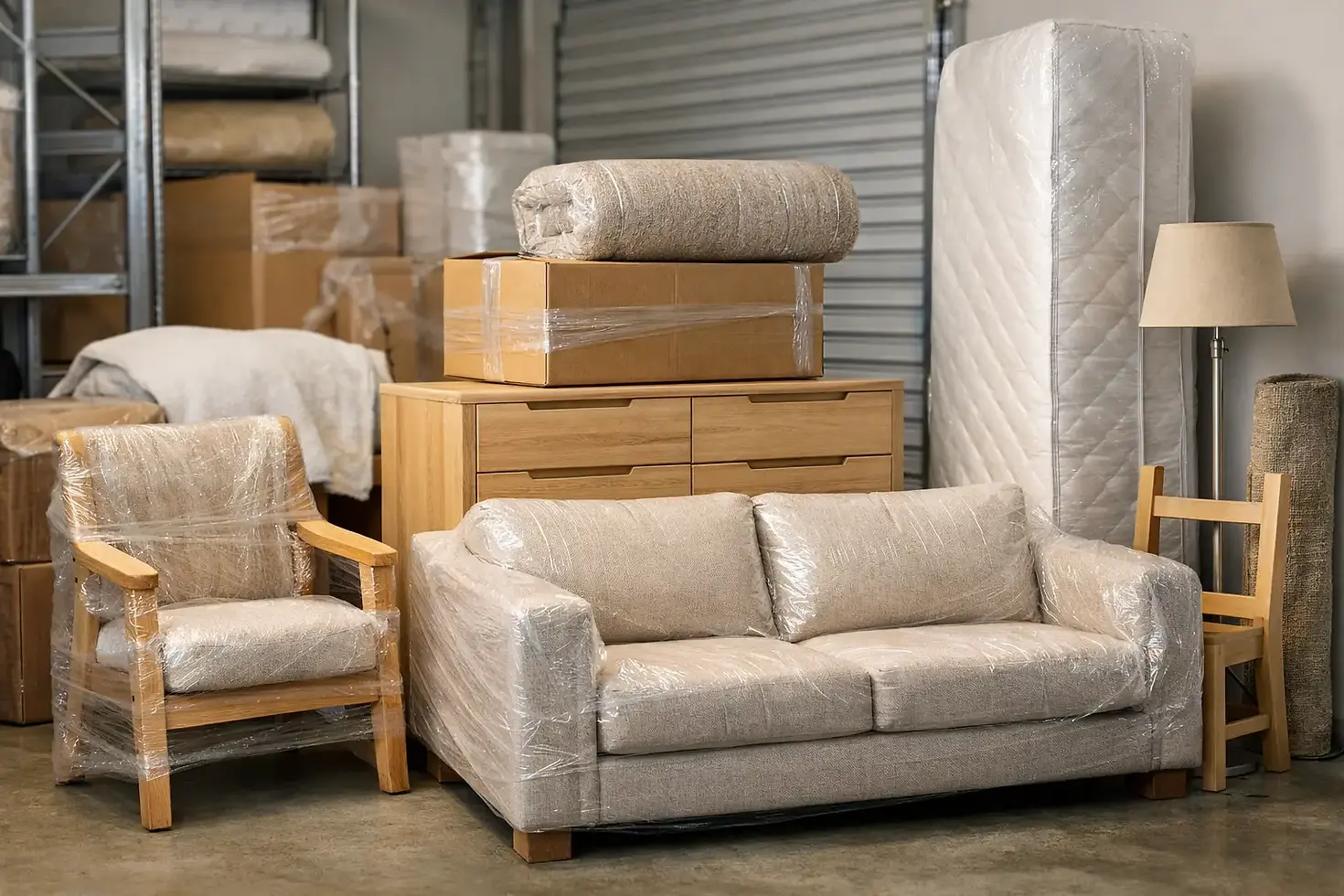
Avoid wrapping furniture tightly in plastic for long periods. Plastic can trap humidity against wood, leather, and fabric. This is one of the most common mistakes people make when preparing furniture for storage in Florida. Plastic wrap is fine for short-term moving protection or for securing a blanket around an item, but it should not be the only layer sitting directly against furniture for months.
Use mattress bags made for storage or moving to keep mattresses clean. If possible, store mattresses flat on a clean, raised surface. Standing a mattress on its side for a brief move is normal, but leaving it upright for a long time can affect its shape, especially with older spring mattresses.
Keep Furniture Off the Floor
Concrete floors can transfer cold and moisture. Raise furniture and boxes with pallets, shelving, or another sturdy barrier so air can move underneath. Even a small amount of elevation is helpful for long-term storage.
Place heavier items on the bottom and lighter items above them. Never stack heavy boxes on sofas, chair arms, mattresses, or delicate tabletops. If you need to place a table on its side to save room, pad the contact points and make sure it is stable. Do not lean a heavy mirror, headboard, or tabletop where it can slide or warp.
For upholstered furniture, keep a little open space around the sides instead of pressing it against walls or tightly packed boxes. This makes airflow better and gives you room to inspect the piece later.
Pack the Unit With Access in Mind
A well-packed unit starts with large furniture along the back and sides, then uses the center for boxed items and a clear aisle. Put items you may need sooner, such as seasonal furniture, a guest-room bed frame, or important household boxes, closer to the door.
Create a simple inventory as you load. You do not need a complicated system. A note on your phone or a paper list with major furniture pieces, box numbers, and their general location can save time months later. Label boxes on at least two sides so you can identify them once they are stacked.
If furniture has drawers, leave them slightly open after the piece is cleaned and dried. This can help prevent stale odors. Secure loose drawers during transport with moving wrap around the outside of the dresser, not tape directly on finished wood.
Plan for Long-Term Checks
Long-term does not have to mean forgotten. Check your unit periodically, especially after severe weather or during humid months. Look for signs of moisture, pests, shifting stacks, or damaged covers. Catching a problem early is much easier than dealing with damage after a year.
Your lease term should fit your timeline, too. Month-to-month storage gives flexibility when a move or renovation date is uncertain. A six-month or annual option can make more sense when you know furniture will be stored through a deployment, extended travel, or a long home project. Choose based on both the duration you expect and the value of the furniture you are protecting.
Security is part of the decision. Use a strong lock, keep your unit number private, and choose a facility with practical protections such as controlled access and video surveillance. Affordable Climate Control Mini Storage Inc. can help local households compare available climate-controlled and standard spaces based on what they are storing, not just what looks cheapest at first glance.
A Quick Long-Term Furniture Storage Checklist
Before you lock the unit, make sure you have handled these basic steps:
Cleaned and completely dried every furniture item
Removed food, personal items, batteries, and heavy drawer contents
Disassembled large pieces when appropriate and saved labeled hardware
Used moving pads or breathable covers instead of tight plastic wrapping
Raised furniture off the floor and avoided unsafe stacking
Left an aisle for access and made a simple inventory
Chosen a unit and lease term that fit the furniture and expected timeline
Good storage is less about packing every inch of a unit and more about giving your furniture the conditions it needs to wait well. A few extra minutes spent cleaning, covering, and arranging pieces properly can make the day you bring them home much easier.


Comments